
For most people, the name KRAFTON means one thing: PUBG. That single battle royale reshaped an entire genre, sold hundreds of millions of copies across platforms, and turned the company into a household name almost overnight. But betting an entire publisher’s future on one franchise is risky, no matter how big that franchise gets — trends shift, player attention moves on, and no single game stays on top forever. That’s exactly why KRAFTON’s Gamescom 2026 announcement matters. Choosing which upcoming games to actually pay attention to out of a crowded showcase floor isn’t easy, and knowing which titles are worth wishlisting now versus waiting on can save you from either missing something great or getting hyped for the wrong thing.
The 7 Key Questions About KRAFTON’s Gamescom 2026 Lineup
What Did KRAFTON Announce at Gamescom 2026?
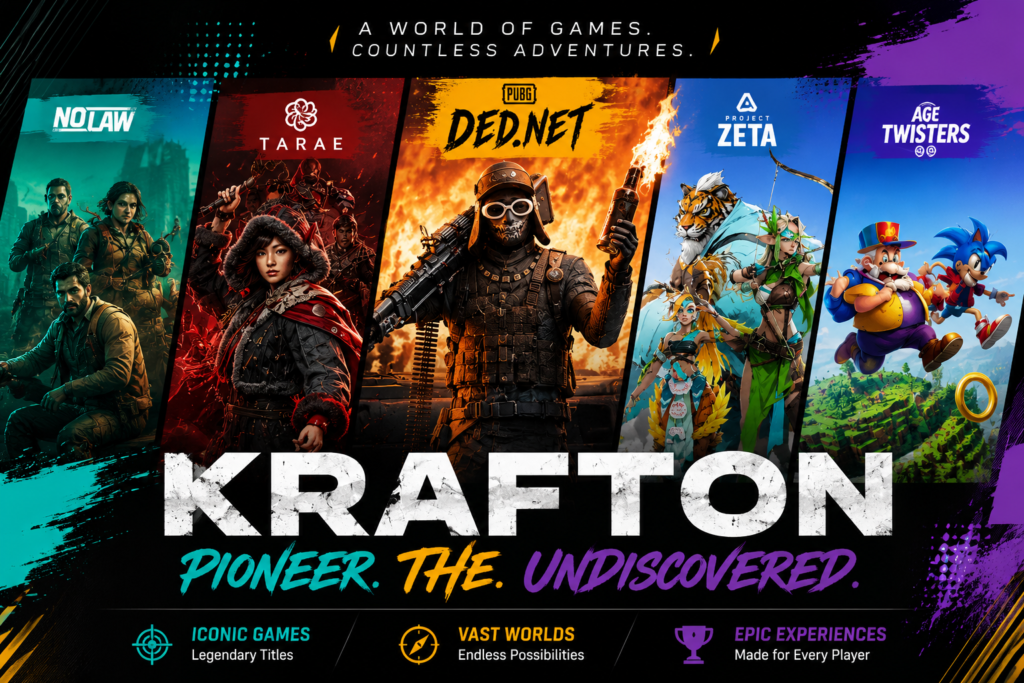
KRAFTON unveiled five upcoming games during its third consecutive Media Day at Gamescom 2026, each developed by a different studio under its expanding portfolio. The lineup spans genres deliberately — an open-world FPS RPG, a tactical team-based arena game, an emotional two-player adventure, an Eastern dark fantasy action RPG, and a reimagined take on the PUBG franchise itself. Rather than doubling down on what already works, KRAFTON used this showcase to demonstrate range: different art styles, different mechanics, and different emotional tones, all under one publisher umbrella. This is less a single game announcement and more a statement about where the company sees its future — as a multi-franchise publisher, not a one-game studio that got lucky once.
When Should You Start Paying Attention to These Titles?
Gamescom reveals like this typically sit well ahead of actual release — often twelve months or more out, especially for titles still being shaped by “global testing and player feedback,” as NIRVANANA explicitly stated about Project ZETA. The smart move right now is wishlisting on the platforms you use and following each studio’s own channels directly, rather than waiting for a release date to appear before caring. If a title’s core concept genuinely excites you, getting in early on beta signups or playtests (common for KRAFTON in the run-up to past launches) gives you a real shot at hands-on time before general release.
Where Are These Games Most Relevant?
Physically, all five games were shown at Koelnmesse Hall 9 during Gamescom 2026’s public days, putting them directly in front of the massive European and international gaming audience that attends the show. More broadly, each title’s genre determines its natural audience hub — competitive arena players will find Project ZETA discussed on esports and MOBA-adjacent forums, while TARAE: The Unbound will likely resonate most within action-RPG and Souls-like communities. PUBG: DED.NET, given the franchise’s massive existing base, will probably dominate conversation across mainstream gaming news and PUBG’s own community channels regardless of genre shift.
Who Is This Lineup For?
Each game targets a distinct player type, which is the whole point of KRAFTON’s strategy here. FPS and open-world fans get NO LAW’s branching, decision-driven city setting. Competitive team-based players get Project ZETA’s fresh spin on structured arena combat. Story-driven, emotionally invested players get Age Twisters’ generational two-player narrative. Action-RPG and fantasy fans get TARAE: The Unbound’s East Asian mythology-inspired world. And existing PUBG fans open to change get DED.NET’s survival-roguelite reinvention, which deliberately isn’t another battle royale. Collectively, the lineup is built to pull in five different audiences rather than compete for the same one.
Why Does This Matter?
This matters because it reflects a broader, necessary shift in how successful gaming companies stay relevant long-term. Studios that rely on a single hit franchise face real risk when player interest naturally shifts — something the industry has seen play out repeatedly with genre trends rising and fading. By backing five different studios across five different genres simultaneously, KRAFTON is hedging against exactly that risk while also signaling creative trust in the individual studios under its umbrella, rather than forcing every project into a PUBG-shaped mold. It also matters for PUBG fans specifically, since DED.NET represents the franchise’s biggest structural departure yet — a genuine test of whether the brand can succeed outside its signature battle royale format.
Which of These Games Should You Watch Most Closely?
That depends entirely on what you’re already into. If you’re a PUBG loyalist, DED.NET deserves your attention first, since it directly reshapes a franchise you already care about — its success or failure will likely influence KRAFTON’s broader risk appetite going forward. If you gravitate toward competitive multiplayer, Project ZETA’s break from traditional lane-based MOBA structure is the more novel bet worth tracking. If you care more about narrative and emotional storytelling, Age Twisters stands out as the most unconventional pitch in the entire lineup — a two-player generational story is rare territory for a publisher best known for competitive shooters.
How Should You Follow These Games Going Forward?
The most reliable approach is following each individual studio’s official channels directly — Neon Giant, NIRVANANA, Piccolo Studio, Boundary, and PUBG STUDIOS — rather than relying solely on KRAFTON’s general announcements, since individual studios often share development updates, playtest signups, and behind-the-scenes content well before a publisher-wide press release. Wishlist each title on your platform of choice as soon as a store page goes live, since wishlist counts genuinely influence a game’s visibility in storefront algorithms. Finally, keep an eye on future gaming showcases and conventions beyond Gamescom, since titles this early in development typically make several public appearances before launch, each one revealing more concrete details.
Important Facts About Following KRAFTON’s New Game Lineup
A few things worth knowing as you track these titles. Gamescom reveals are rarely release-ready — games shown at this stage are often still years from launch, and features or even entire mechanics can change based on player feedback during testing phases. A common mistake is assuming every showcased title will actually ship — game announcements do occasionally get quietly shelved, especially for smaller or more experimental titles within a larger publisher’s slate, so temper expectations accordingly. Genre labels can be misleading at this stage — a game described as a “tactical arena” or “dark fantasy action RPG” may shift meaningfully in mechanics between reveal and launch, so treat early descriptions as a starting point, not a final spec. Watch for platform availability details, which are often absent at initial reveal and only confirmed closer to launch — don’t assume a title will be available on your platform of choice without official confirmation. Finally, remember that KRAFTON’s stated “global franchise” strategy means marketing and community focus may shift game-by-game depending on regional testing results, so don’t be surprised if promotional attention varies significantly across these five titles over the coming months.
The 5 Games KRAFTON Unveiled at Gamescom 2026, Compared
Here’s how each of KRAFTON’s five newly revealed titles stacks up — genre, core hook, and who should be watching closest.
1. NO LAW (Neon Giant) What it does well: Builds an open-world FPS RPG around Port Desire, a city where law and order have collapsed, using the latest Unreal Engine technology to let player decisions genuinely reshape the challenges and story they encounter.
- Pros: Strong player-choice emphasis, cutting-edge visual technology, open-world freedom
- Cons: Open-world decision-driven games are notoriously hard to balance well; details on core gameplay loop remain limited at this stage Best suited for: FPS fans who want narrative consequence and open-world freedom over a linear shooter campaign.
2. Project ZETA (NIRVANANA) What it does well: Reworks the tactical team-arena formula by dropping the traditional lane-based MOBA structure in favor of four three-player teams entering objective-focused battles from the very start.
- Pros: Fresh structural take on a familiar genre, faster-paced objective focus, active studio commitment to refining through global testing
- Cons: Breaking from familiar MOBA conventions carries real risk of alienating genre veterans; still early in testing and refinement Best suited for: Competitive players tired of traditional MOBA pacing who want something more immediately action-focused.
3. Age Twisters (Piccolo Studio) What it does well: Delivers a genuinely unconventional two-player adventure following a grandfather and granddaughter through four distinct life stages, with gameplay abilities and conversations shifting based on their age gap at each stage.
- Pros: Emotionally distinctive concept, strong narrative hook, continues Piccolo Studio’s track record with emotionally driven design
- Cons: Two-player-focused games can limit audience reach for solo players; niche appeal compared to competitive titles in the lineup Best suited for: Players who want a story-driven, emotionally resonant experience over competitive or open-world gameplay.
4. TARAE: The Unbound (Boundary) What it does well: Builds an Eastern dark fantasy action RPG grounded in Buddhist concepts of reincarnation and karma, using East Asian mythology and aesthetics to create an identity distinct from typical Western medieval dark fantasy.
- Pros: Culturally distinctive setting rarely seen in the genre, strong thematic grounding, differentiated visual identity
- Cons: Action RPG combat systems live or die on execution details not yet fully revealed; genre is highly competitive with established franchises Best suited for: Action-RPG and dark fantasy fans looking for a setting and mythology outside the usual Western medieval mold.
5. PUBG: DED.NET (PUBG STUDIOS) What it does well: Reinvents the PUBG franchise by keeping its survival and competitive DNA while dropping the battle royale format entirely, setting the game in a fictional 1996 Cascadia with a roguelite, run-based structure where player decisions shape each playthrough.
- Pros: Bold franchise reinvention, distinctive time-period and setting, roguelite structure offers high replayability
- Cons: Major departure risks alienating battle-royale-focused PUBG fans; success is unproven outside the franchise’s signature format Best suited for: Existing PUBG fans open to genre change, and roguelite/survival fans curious about a fresh take on a familiar IP.
Top Guide Questions & Answers
How do I know which of these five games to wishlist first? Start with whichever genre you already play most, since that’s the strongest predictor of actual enjoyment regardless of hype. If you’re unsure, PUBG: DED.NET is the safest starting point for most readers simply because it’s tied to a franchise with an established track record, even though the format itself is new.
Will these games be available on console, PC, or both? Platform details weren’t fully confirmed for most titles at the Gamescom reveal stage, which is normal this early in development. Check each studio’s official channels or store page as it goes live for confirmed platform availability closer to launch.
Is PUBG: DED.NET replacing PUBG: BATTLEGROUNDS? No — DED.NET represents a new direction and a new game within the broader PUBG franchise rather than a replacement for the existing battle royale title. PUBG: BATTLEGROUNDS is expected to continue operating as its own separate live-service game.
How can I get into a beta or playtest for any of these titles? Follow the developing studio’s official social channels and website directly, since playtest and beta signups are typically announced there before broader publisher-wide promotion. KRAFTON has run public playtests ahead of past launches, so it’s reasonable to expect similar opportunities as these titles get closer to release.
Why is KRAFTON backing five completely different genres at once instead of focusing on PUBG? Diversifying across genres and studios reduces the company’s dependence on any single franchise’s continued popularity, which protects against the natural rise and fall of gaming trends. It also lets KRAFTON support creative ideas from multiple studios rather than forcing every project into a PUBG-adjacent mold.
What typically happens after a Gamescom reveal like this? Games shown at this stage usually go through further refinement based on player and press feedback, additional showcases at future gaming events, and eventually open beta or early access phases before a full launch. Expect incremental drips of information over the following months rather than an immediate release.
FAQs
Q1: What games did KRAFTON announce at Gamescom 2026? KRAFTON revealed five titles: NO LAW from Neon Giant, Project ZETA from NIRVANANA, Age Twisters from Piccolo Studio, TARAE: The Unbound from Boundary, and PUBG: DED.NET from PUBG STUDIOS. Each comes from a different genre and development studio under KRAFTON’s growing portfolio.
Q2: What is PUBG: DED.NET? PUBG: DED.NET is a new direction for the PUBG franchise that keeps its survival and competitive roots but abandons the traditional battle royale format in favor of a roguelite, run-based structure. It’s set in a fictional version of Cascadia in 1996, drawing inspiration from the Pacific Northwest region.
Q3: Where were KRAFTON’s new games shown at Gamescom 2026? All five titles were showcased at Koelnmesse Hall 9 in Cologne, Germany, during Gamescom 2026’s public showcase days, running from August 26 to 30.
Q4: When will these KRAFTON games be released? No official release dates were confirmed at the Gamescom 2026 reveal. Titles at this stage, particularly ones still undergoing global testing like Project ZETA, are typically a year or more away from full release.
Q5: What genre is TARAE: The Unbound? TARAE: The Unbound is an Eastern dark fantasy action RPG developed by Boundary, drawing on Buddhist concepts of reincarnation and karma alongside East Asian mythology and aesthetics, distinguishing it from typical Western medieval dark fantasy settings.
Conclusion
KRAFTON’s Gamescom 2026 lineup is a clear statement of intent: five games, five genres, five different studios, all under one publisher betting that creative diversity beats relying on a single franchise forever. From NO LAW’s decision-driven open world to Age Twisters’ emotionally distinctive two-player story, and especially PUBG: DED.NET’s bold reinvention of the company’s flagship franchise, this showcase gives fans across very different gaming tastes something genuinely worth tracking. The main thing to keep in mind as you follow these titles is patience — Gamescom reveals sit early in development, so treat this as the start of a longer journey rather than a countdown to imminent release.