You know that feeling when everything just clicks? When preparation, timing, and a little bit of luck come together at the exact right moment?
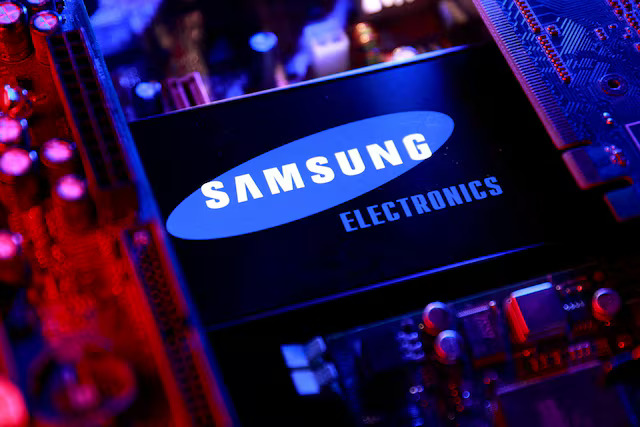
That’s where Samsung Electronics finds itself today.
For the first time ever, Samsung’s market capitalization has crossed the $1 trillion mark. Let that sink in for a second. That’s not just a number with a lot of zeros—it’s a milestone that puts Samsung in an incredibly exclusive club. In all of Asia, only one other company has gotten there before: TSMC, the Taiwanese semiconductor giant.
So how did Samsung pull this off? And why does it matter to you, whether you’re an investor, a tech enthusiast, or just someone trying to make sense of a volatile market?
Let’s break it down.
The Headline, Plain and Simple
On May 6, 2026, Samsung Electronics’ common stock value hit 1,500 trillion Korean won. In U.S. dollars, that’s about $1.03 trillion.
That’s a massive number, but let’s put it in perspective: reaching a trillion-dollar market cap isn’t just about size. It’s about investor confidence, technological leadership, and the market’s belief that a company will keep growing for years to come. Samsung is now the second Asian company to reach that level, right behind TSMC.
And here’s the kicker—Samsung didn’t get there alone.
The Real Spark: U.S. AI Chip Stocks
If you’ve been watching the stock market lately, you know that artificial intelligence has been the story of the year. AI isn’t just a buzzy trend anymore. It’s reshaping industries, and chipmakers are at the center of it all.
Samsung rode a wave fueled by sharp gains in U.S. AI-related stocks. Specifically, the S&P 500 and Nasdaq hit record highs on Tuesday, boosted by companies like Intel and other big names in the AI chip space. Why? Because a U.S.-Iran ceasefire held (removing a major geopolitical worry), and investors turned their attention to what really matters: strong quarterly earnings.
When U.S. AI chip stocks surge, Samsung feels it. The company is the world’s largest memory chip maker, and AI systems devour memory chips like a marathon runner guzzles water. More AI means more demand for Samsung’s products. Simple as that.
What Happened in the Market?
Here’s where the numbers get exciting—and a little wild.
In early trading in Seoul on Wednesday, Samsung’s share price jumped 12%. That’s not a small pop. That’s a “whoa, something big is happening” kind of move.
To give you some context, the broader South Korean KOSPI index was up 5.4% that same morning. So Samsung didn’t just beat the market; it crushed it. Investors weren’t just buying Korean stocks—they were piling into Samsung specifically because they saw AI-driven upside.
Why This Matters (Even If You Don’t Own Samsung Stock)
You might be thinking: “Okay, a big company got bigger. Why should I care?”
Fair question. Here’s why this story is actually useful to you.
First, it’s a signal. When a bellwether company like Samsung crosses the trillion-dollar threshold, it tells you where the smart money is flowing. Right now, that’s toward AI infrastructure. And not just the flashy AI apps you hear about—the actual hardware, the chips, the memory, the backbone that makes AI work.
Second, it highlights a pattern. Geopolitical tensions eased (the Iran ceasefire), and investors immediately pivoted back to earnings and growth. That tells you that markets are still rational at their core. When fear subsides, fundamentals win.
And third, it’s a reminder that tech is global. You can’t understand Nvidia or Intel without understanding Samsung. You can’t understand AI’s future without understanding memory chips. This isn’t just a South Korean story or an American story—it’s a connected, worldwide picture.
One Small Footnote (That Actually Matters)
The exchange rate matters here. Reuters noted that $1 equaled 1,458.2000 Korean won at the time. Currency fluctuations can make or break these comparisons, so the fact that Samsung hit the trillion-dollar mark despite a fairly strong dollar (meaning the won wasn’t artificially inflating the number) makes the achievement even more solid.
The Bigger Picture
Let’s zoom out for a second.
Samsung has been a dominant force in memory chips for years. But crossing $1 trillion in market cap isn’t just about having a good quarter or a hot product. It’s about the market believing that Samsung will be a leader in the next phase of tech—AI, automation, data centers, and beyond.
And the timing? Perfect. With U.S. AI stocks on fire, a ceasefire reducing geopolitical risk, and strong earnings season in full swing, all the stars aligned.
So What’s the Takeaway?
If you’re an investor, this is a moment to pay attention to the AI supply chain—not just the flashy end-products, but the foundational pieces like memory chips.
If you’re a tech enthusiast, it’s proof that the AI boom is real, and it’s showing up in balance sheets and stock prices, not just product demos.
And if you’re just someone trying to understand the world a little better? You now know why a South Korean chipmaker just made history—and why what happens in U.S. markets doesn’t stay in the U.S.
Samsung’s $1 trillion milestone isn’t the end of the story. If anything, it’s a signal that the AI-driven era is only getting started.